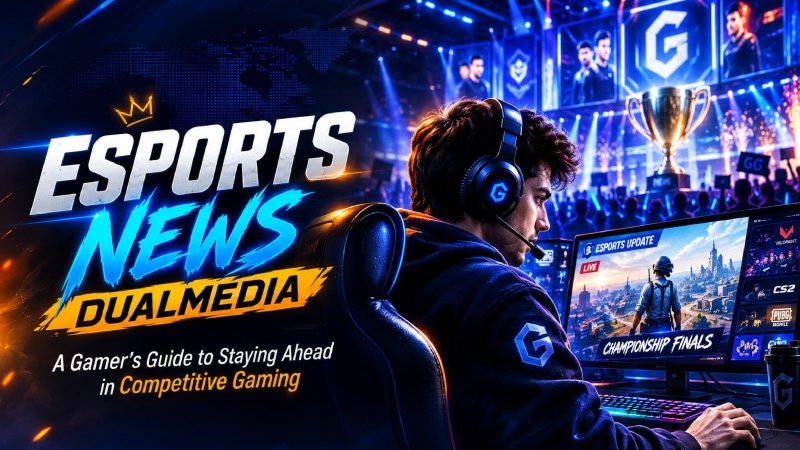
Esports moves fast. New patches drop, rosters shift, and tournament brackets change within days. Staying on top of it takes more than checking a scoreboard. That’s exactly why gamers search for Esports News Dualmedia when they want deeper competitive gaming coverage. This guide explains what that name refers to. It also covers what kind of content this space includes, and how fans can use dedicated coverage to follow their favorite games more closely.
What Is Esports News Dualmedia?
Esports News Dualmedia positions itself as a media platform focused on competitive gaming coverage. Instead, it frames its content around a “dual” angle. The idea blends two roles into one: reporting on esports while drawing on a player’s own understanding of the game. The pitch is simple. Someone who understands the meta and the pressure of competition can explain a match better than someone who only watches the final score.
One thing is worth stating clearly here. Independent, official verification of specific claims about this platform’s history isn’t easy to find. The same goes for its exact founding details or team record. Long-established outlets carry public records that back up their claims. Newer platforms often don’t have that same paper trail yet. Readers should treat any specific factual claim about the platform’s background as unconfirmed. Check it against a primary source before repeating it as fact.
This caution isn’t unique to any one platform. Esports media as a whole has grown quickly, and plenty of newer sites have entered the space over the past few years. Some build a track record through consistent, accurate reporting over time. Others rely more on volume than verification. Knowing the difference matters for any fan who wants reliable information rather than just fast headlines.
Match Coverage: What Gets Reported and Why It Matters
Match coverage sits at the center of any esports outlet. This usually includes final scores. But the more valuable pieces explain how a match actually unfolded. Did a team come back from a losing position? Did a coach call a mid-match timeout that changed momentum? Coverage built around these details gives fans a real reason to read past the headline.
For competitive players, match breakdowns carry practical value too. Picture a tight round on a defused bomb site, or a late-game team fight that decides a match. Watching how a professional team handled that exact situation can turn into a lesson for a player’s own matches.
Player and Team Storylines
Esports fans don’t just want to know who won. They want context. Why did a star player switch teams before a major tournament? How did a young rookie earn a starting spot over a veteran? These storylines turn a casual viewer into someone who follows a specific team season after season.
Good storytelling in this space tends to track a few recurring threads. A player’s growth over multiple seasons is one. Rivalries between specific teams are another. So is the pressure that builds heading into elimination matches. When coverage captures that context, it gives fans a reason to care about the outcome beyond the scoreboard.
Tournament and Event Coverage
Major tournaments anchor the esports calendar. League finals, regional qualifiers, and international championships draw the biggest audiences. They also draw the most detailed coverage. Tournament-focused reporting typically tracks bracket predictions and group stage standings. It also recaps standout matches as the event progresses.
For fans following a tournament in real time, this kind of coverage fills the gaps between live matches. It explains tiebreaker scenarios and seeding implications. It also clarifies what a team needs to do in their next match to advance.
Game Updates and Patch Notes
Competitive games change constantly. Developers release patches that adjust character balance, weapon stats, or map layouts. These changes can reshape an entire competitive season overnight. Coverage that explains what a patch actually means for competitive play helps players the most. A simple list of numbers doesn’t tell you why a strategy suddenly works better or worse.
This matters for ranked players too, not just tournament viewers. A patch that weakens a popular strategy at the professional level often has the same effect in ranked matchmaking. That shift can happen within days of the patch going live.
Esports Analysis Beyond the Score
Analysis separates basic reporting from coverage that actually teaches fans something. Strong esports analysis looks at draft decisions and rotation timing. It also digs into why a specific strategy worked against one opponent but failed against another. This kind of breakdown appeals most to fans who already understand a game’s basics. They want a deeper read on strategy, not just a summary.
Analysis pieces also tend to age better than simple match recaps. A well-explained strategic trend can stay relevant for weeks. A single match score, on the other hand, becomes old news within a day.
Community Engagement Around Esports Coverage
Modern esports coverage rarely stays one-directional. Comment sections, Discord servers, and live chat during broadcasts have become part of how fans experience competitive gaming. Many outlets now build community spaces around their coverage. It’s not just a list of articles to read anymore.
This shift makes sense when you think about it. Esports fans increasingly want to feel like participants. They debate strategy calls, predict upcoming matchups, and share their own clips alongside official coverage. Outlets that support this kind of engagement tend to build more loyal, returning audiences than outlets that only publish one-way updates.
Popular Games Covered in Esports News
Esports coverage generally follows wherever competitive audiences are largest. A few genres dominate this space:
- Tactical shooters, such as Counter-Strike 2 and Valorant, where precise aim and round-by-round strategy drive the drama
- Battle royale titles, such as Fortnite and Apex Legends, where shifting maps and weekly changes keep the competitive scene fast-moving
- MOBAs, such as League of Legends, where drafting and team coordination usually decide the outcome
- Legacy shooters, such as Halo, which still hold a loyal competitive fanbase years after release
Coverage across these titles usually blends written recaps, player interviews, and roster updates. Fans who want more than a one-line score tend to seek this kind of content out specifically.
Regional and Emerging Scenes
Esports coverage doesn’t stop at the biggest international leagues. Regional scenes in North America, Europe, and Southeast Asia each carry their own storylines, rising teams, and local rivalries. Smaller, emerging titles also build dedicated competitive communities long before they reach mainstream attention. Fans who follow these regional and emerging scenes closely often get a head start on spotting the next breakout player or team before a bigger tournament run puts them on the global map.
How to Evaluate Any Esports News Source
Not every gaming news outlet holds the same editorial standards. Before treating any specific claim as fact, take one extra step. This applies most to tournament results, roster changes, or prize pool numbers. Check the claim against the official tournament organizer or the team’s own announcement first. This standard applies to this platform just as it applies to any other outlet, established or new.
A simple habit helps here. Read the story, then confirm the key facts somewhere else before sharing or repeating them. This takes only a minute. It also protects fans from spreading outdated or incorrect information without meaning to.
Future Trends in Esports Coverage
Esports keeps growing into a mainstream entertainment category. Coverage keeps evolving right alongside it. Expect more outlets to blend traditional written reporting with video breakdowns and live commentary. Behind-the-scenes player access is becoming more common too. Data-driven analysis is also playing a bigger role. Think win rates by map, or agent pick rates broken down by region.
For gamers, this shift means more ways to follow the games they love. It also means more competition among outlets. That pressure pushes everyone toward accurate, well-sourced coverage instead of recycled headlines.
Mobile esports also deserves a mention here. Titles built specifically for phones have grown into serious competitive scenes in several regions, with their own leagues, sponsors, and dedicated fanbases. As mobile hardware keeps improving, coverage of this segment will likely keep expanding alongside coverage of traditional PC and console esports.
Conclusion
Esports News Dualmedia fits into a fast-growing space of competitive gaming coverage that goes beyond simple scoreboards. Maybe you’re tracking a Valorant tournament bracket. Maybe you’re following a League of Legends roster change. Or maybe you just want to understand a patch’s impact on ranked play. Good esports coverage adds context that a scoreboard alone can’t provide. As with any gaming news source, confirm major claims against official announcements. Treat coverage like this as one useful piece of a bigger picture, not the final word.
FAQs
What is Esports News Dualmedia? It’s a media platform focused on competitive gaming coverage. It’s built around combining journalism with a player’s-eye understanding of the games it covers.
What games does Esports News Dualmedia cover? Coverage in this space typically spans popular competitive titles like Valorant, Counter-Strike 2, League of Legends, Fortnite, Apex Legends, and Halo.
Is Esports News Dualmedia a verified or official esports outlet? There’s no independently confirmed public record of its founding, ownership, or history, unlike long-established outlets. Treat specific factual claims about it as unconfirmed until you check them against a primary source.
How can I check if esports news is accurate? Compare the claim against the official tournament organizer’s results. You can also check the team’s own social media or the game developer’s patch notes before treating a claim as confirmed.
Why does esports need dedicated news coverage? Competitive games change fast through patches, roster moves, and tournament results. Dedicated coverage helps fans understand not just what happened, but why it happened and what it means going forward.
Does esports news coverage help competitive players improve? Yes, in a practical sense. Watching how professional players and teams handle specific in-game situations can offer real lessons. Those lessons often carry over into a player’s own ranked or casual matches.
What’s the difference between a match recap and esports analysis? A match recap reports the final result and key moments. Analysis goes further. It explains draft decisions, strategic adjustments, and why a specific approach succeeded or failed against a particular opponent.
Looking for more details.