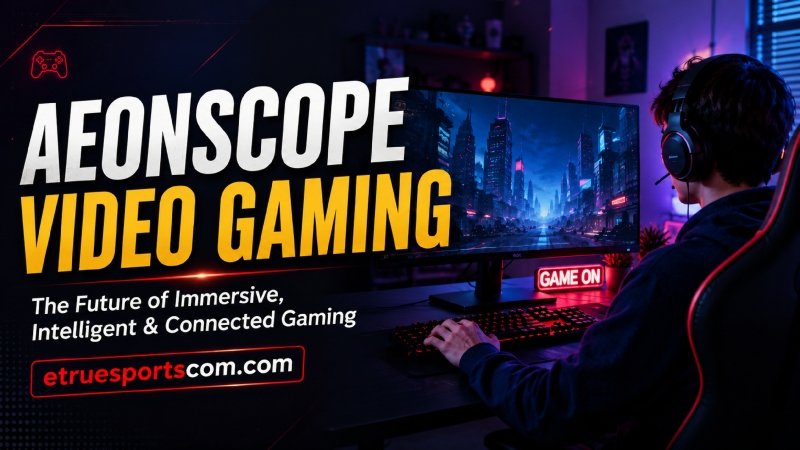
If you have searched for aeonscope video gaming recently, you are not alone. The term has been popping up across gaming blogs, forums, and social media, and a lot of people want to know exactly what it means. This article explains what the term refers to, how it connects to real trends in the gaming world, and what it could mean for the future of how we play.
Before diving in, it helps to know one thing upfront: this term does not refer to a single, official product from one well-known company. It is best understood as a term that describes a broader shift toward more immersive, intelligent, and connected gaming experiences. This article focuses on the real technologies and trends behind the idea instead of making unverified claims.
What Is Aeonscope Video Gaming?
At its core, this term describes a growing idea in the gaming world: games that go beyond a flat screen and a controller, aiming instead for deeper immersion, smarter interaction, and a more personalized experience. Rather than referring to one specific console or app, it is often used as shorthand for this bigger direction gaming is heading in.
Think of it as an umbrella phrase. Some writers use it to talk about virtual reality (VR) and augmented reality (AR) tools that place players inside a game world instead of just watching it on a screen. Others use it to describe how artificial intelligence (AI) is starting to shape gameplay, from smarter non-player characters to worlds that adapt based on how a player behaves. Because the term is still fairly new and not tied to one official source, you will find it described in slightly different ways depending on where you read about it.
How Aeonscope Video Gaming Works
Since this is more of a concept than a single confirmed product, it helps to explain it through the technology it usually gets connected to.
Immersive Visual Systems
A major piece of this idea involves visual immersion. Traditional gaming relies on a monitor or TV screen, where the player views the game from the outside. VR headsets flip that setup, placing a screen close to the eyes and tracking head movement so the game world responds as the player looks around. Some newer approaches also explore AR, which blends digital elements into the real world using a headset or camera, rather than replacing the real world entirely.
Smarter, More Responsive Gameplay
The second piece involves artificial intelligence. Instead of following fixed, pre-programmed patterns, AI-driven systems can adjust difficulty, dialogue, or world events based on how a player is actually performing. This is part of a broader movement in gaming technology, where developers are experimenting with games that feel less scripted and more reactive to the individual player.
Connected, Cloud-Based Play
A third piece is connectivity. Cloud gaming, where the heavy processing happens on remote servers instead of a local console, has made it easier for players to jump into demanding games without needing top-tier hardware. This fits into the broader conversation because it removes some of the traditional barriers to entry for immersive gaming experiences.
Key Features Associated With Aeonscope Gaming
While there is no single confirmed feature list, most discussions around this term tend to focus on a similar set of ideas:
- Immersive environments that aim to make players feel present inside the game, not just watching it
- Adaptive gameplay that responds to player choices, skill level, or behavior over time
- Cross-device accessibility, allowing players to jump between platforms without losing progress
- Community-driven content, where players and developers collaborate on ideas, mods, or shared experiences
- A focus on storytelling, blending narrative depth with interactive mechanics
These features are common goals across much of the modern gaming industry, not something unique to one product, but they help explain why this term keeps getting used to describe this general direction.
The Gaming Experience
What sets this kind of gaming experience apart from traditional setups is the emphasis on presence. Instead of controlling a character from a distance, the goal is to make players feel like they are part of the world itself. This can include realistic environmental sound, responsive lighting, and interactions that feel more natural than pressing a button to trigger a fixed animation.
For players who enjoy exploration and discovery, this style of gaming experience tends to reward curiosity. Wandering off the main path, interacting with the environment, and experimenting with different choices often feels more meaningful when the world is designed to respond to those actions.
Games and Genres
Because this idea is a broad concept rather than one platform, it touches several genres rather than sticking to just one.
Exploration and Adventure
Open-world and exploration-based games are a natural fit, since immersive technology tends to shine when there is a large, detailed environment to explore. Games in this space often emphasize discovery, environmental storytelling, and a sense of scale.
Role-Playing Games (RPGs)
RPGs also fit well into this conversation, since they already focus on player choice, character growth, and branching stories. Adding more adaptive, AI-driven systems fits naturally into a genre that is already built around personalization.
Competitive and Action Titles
Fast-paced action and competitive games benefit from the responsiveness side of this trend, particularly when it comes to smoother controls, quicker matchmaking, and more reactive environments.
It’s worth noting that no specific, verified game currently carries an official “aeonscope” branding from a major, confirmed publisher. Readers interested in trying immersive VR or AI-driven games today are better served by researching specific, well-reviewed titles from established platforms rather than searching for one single “aeonscope” release.
Multiplayer Gaming and Esports Connections
Multiplayer gaming and esports are two areas where these ideas show up in practical ways. Low-latency cloud connections make competitive online play smoother, which matters a lot in esports, where a split-second delay can decide a match. Voice chat, spectator tools, and cross-platform matchmaking have also become standard expectations for multiplayer titles, and all of these fit under the same broader push toward more connected, responsive gaming experiences.
For esports specifically, immersive spectating tools, like multiple camera angles or VR-based viewing options, are an area some developers and tournament organizers are experimenting with, aiming to make watching competitive gaming feel closer to being in the arena.
Hardware and Software Requirements
Since this concept is not tied to one official product, there is no single confirmed hardware requirement to point to. That said, if you want to explore the general technology this term is associated with, a few practical guidelines apply:
- For VR-based experiences: you typically need a compatible VR headset, a reasonably powerful PC or console, and enough physical space to move safely.
- For AI-enhanced games: most of this processing happens on the developer’s side or in the cloud, so requirements are usually similar to any modern game on your platform of choice.
- For cloud gaming: a stable, fast internet connection matters more than raw hardware power, since the heavy lifting happens on remote servers.
Before buying any hardware specifically because of a game or platform claiming to be connected to this trend, it’s smart to verify the product through official retailers and trusted reviews first.
Benefits of This Gaming Direction
The broader shift that this concept represents comes with some real advantages. Immersive technology can make games feel more emotionally engaging, since players are reacting to a world rather than just a screen. Adaptive systems can also make games more replayable, since no two playthroughs need to feel exactly the same. Cloud-based access lowers the barrier to entry for players who cannot afford high-end gaming hardware, opening up more immersive experiences to a wider audience.
Possible Limitations
It’s just as important to be realistic about the downsides. VR and AR hardware can still be expensive and uncomfortable for extended sessions. Cloud gaming depends heavily on a strong internet connection, and lag or instability can ruin the experience. AI-driven adaptive gameplay is also still an evolving field, and not every implementation works as smoothly as developers intend. Since this is not one confirmed product, readers should also be cautious of any website or ad that claims to sell an official “aeonscope” game or device without a clearly verifiable source.
Tips for Beginners
If you are curious about exploring this style of gaming, a few practical tips can help:
- Start with well-reviewed, established VR or AI-driven titles rather than searching for one specific unverified product name.
- Check your internet speed before trying cloud gaming, since a stable connection matters more than a powerful PC.
- Read recent reviews before buying any headset or hardware, since this technology changes quickly.
- Take breaks during VR sessions to avoid motion sickness or eye strain, especially when you are new to it.
- Join gaming communities and forums to get real feedback from other players before investing in expensive gear.
The Future of Aeonscope Video Gaming
Looking ahead, these ideas point toward a gaming industry that keeps blending immersion, intelligence, and connectivity more tightly together. As VR and AR hardware becomes more affordable, and as AI tools continue to mature, it’s reasonable to expect more games built around these principles, even if they are not all marketed under the exact same name.
For now, the smartest approach is to treat aeonscope video gaming as a useful way to describe where gaming technology is heading, rather than a single product to buy. Staying informed through trusted gaming news sources will give you a clearer picture than any one search result can.
Conclusion
Aeonscope video gaming is best understood as a term describing an emerging direction in gaming, one built around immersive visuals, adaptive AI, and stronger connectivity, rather than one official, confirmed product. The technology behind these ideas, VR, AR, AI, and cloud gaming, is real and already shaping the industry in visible ways. As this space keeps evolving, players who stay curious and rely on trusted sources will be best positioned to make sense of what comes next.
FAQs
What does aeonscope video gaming mean? It refers to a broader, emerging trend in gaming that emphasizes immersive visuals, adaptive AI-driven gameplay, and stronger connectivity, rather than one specific confirmed product or company.
Is Aeonscope a real gaming company? There is no single, widely verified company officially known as Aeonscope with confirmed released games. The term is mostly used to describe a direction in gaming technology rather than one specific brand.
Do I need a VR headset to experience this kind of gaming? Not necessarily. While VR is one part of this broader trend, AI-driven gameplay and cloud gaming can also be experienced on standard PCs, consoles, or even some mobile devices.
Is this style of gaming good for beginners? Yes, in the sense that the underlying technologies, like cloud gaming and AI-enhanced games, are becoming more accessible. Beginners should start with well-reviewed, established titles rather than searching for one unverified product.
How does this trend relate to esports? Low-latency connections, smoother multiplayer systems, and immersive spectating tools are also changing how esports events are played and broadcast.
Is it safe to try games connected to this trend? Generally, yes, if you stick to established hardware and well-reviewed games. Be cautious of any site claiming to sell an official “aeonscope” product without a clearly verifiable, trustworthy source.
Will this become more popular in the future? The underlying technology, immersive visuals, AI, and cloud connectivity, is already growing across the gaming industry, so it’s likely that games built around these ideas will keep becoming more common, even under different branding.
Looking for more details.