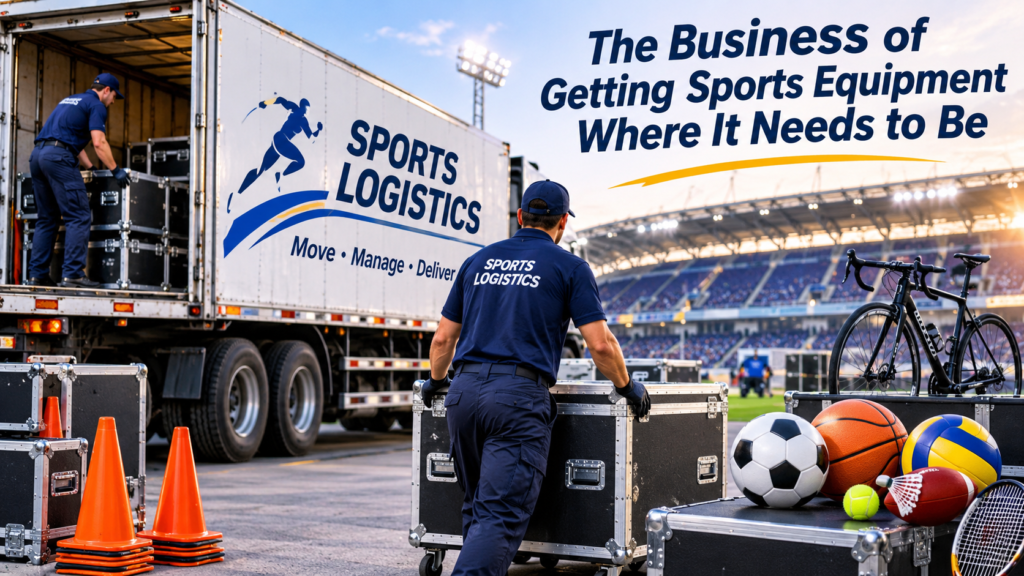
When fans watch their favorite teams compete, they rarely think about the work happening behind the scenes. From professional football matches to international cycling competitions, sporting events depend on an enormous amount of equipment arriving at the right place, in good condition, and on time. Without proper coordination, even the most talented athletes can find themselves facing unnecessary difficulties before a competition begins.
Transporting sporting equipment has become an important part of the sports industry, involving careful planning, specialist services, and increasingly sophisticated logistics.
The Hidden Logistics Behind Major Sporting Events
Large sporting events require much more than uniforms and a few bags of equipment. Depending on the sport, organizers may need to arrange transportation for training machines, protective gear, bicycles, timing systems, and technical equipment.
Professional teams often travel with dedicated support staff responsible for ensuring everything reaches its destination.
Equipment must sometimes arrive well before the athletes themselves, allowing sufficient time for installation, testing, and preparation.
A delayed delivery can disrupt training schedules or leave organizers scrambling to find replacements, making reliable transportation essential.
Different Sports Bring Different Challenges
Not all sporting equipment can be transported in the same way. A football team’s kit presents very different logistical requirements from a professional cyclist’s racing bicycle or a motorsport team’s equipment.
Bicycles may require protective cases and careful handling to prevent damage to frames and components. Larger fitness machines can need additional lifting equipment, while delicate electronic timing systems require suitable packaging.
Motorsport presents particularly demanding challenges because teams transport vehicles, spare parts, tools, and technical equipment between circuits.
Understanding the specific requirements of each sport helps organizations choose appropriate transportation arrangements.
How Smaller Clubs Manage Transportation Costs
Professional sports organizations may have dedicated logistics departments, but amateur clubs and smaller teams often operate with much tighter budgets.
Purchasing second-hand gym equipment, moving training facilities, or collecting bulky items from another location can create unexpected expenses.
Online transportation marketplaces such as shiply.com allow individuals and organizations to compare delivery quotes for suitable items, potentially helping smaller clubs explore more affordable transportation options.
However, teams should confirm insurance arrangements, handling requirements, and collection schedules before booking.
For specialist or particularly valuable sporting equipment, experienced transportation providers may be necessary.
Technology Is Changing Sports Logistics
Digital systems are making it easier for sports organizations to coordinate equipment movements across multiple locations.
GPS tracking, electronic inventory systems, and logistics software can help teams monitor shipments and identify potential delays.
Inventory management is especially important when organizations own large quantities of equipment distributed between training grounds, stadiums, and storage facilities.
Accurate records help staff understand what equipment is available, where it’s located, and when maintenance or replacement may be required.
Better information can reduce unnecessary purchases and prevent essential items from being overlooked.
Planning for the Unexpected
Even carefully organized transportation arrangements can be affected by traffic, severe weather, mechanical problems, or scheduling changes.
Sports organizations therefore need contingency plans, particularly when equipment is required for competitions with fixed start times.
Maintaining spare essentials, allowing reasonable delivery windows, and establishing clear communication with transportation providers can reduce disruption.
For international events, customs documentation and import requirements may introduce further complications.
Planning these details early gives teams more flexibility when unexpected problems arise.
The Business Behind Sporting Success
Sports logistics might not attract the same attention as player transfers, sponsorship agreements, or championship results, but it remains an essential part of the industry.
Every successful event depends on people coordinating equipment, venues, schedules, and transportation long before spectators arrive.
As sporting organizations expand their activities and competitions become increasingly international, efficient logistics will continue to matter.
For teams of every size, getting equipment where it needs to be isn’t simply an administrative task. It’s part of creating the conditions that allow athletes to perform at their best.