
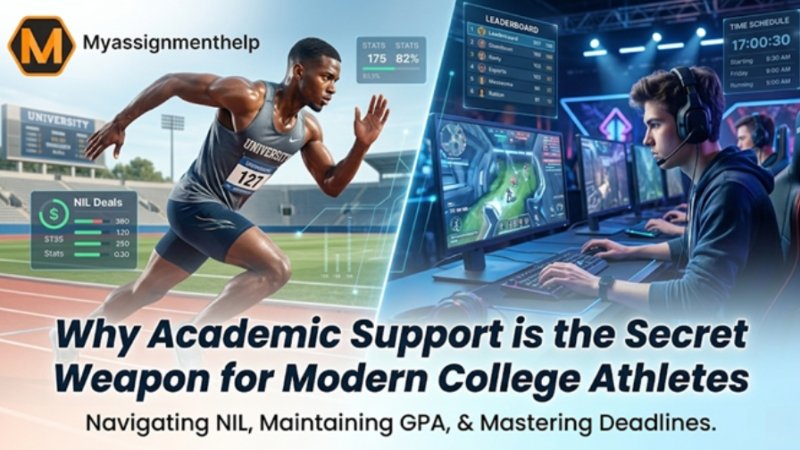
The image of the “college athlete” has undergone a massive transformation over the last decade. It’s no longer just about early morning practices and weekend games; it’s about managing a personal brand, navigating complex NIL (Name, Image, and Likeness) deals, and maintaining the stamina for grueling travel schedules. Yet, amidst the roar of the stadium and the digital glow of the arena, the classroom remains the ultimate equalizer. For many, the true challenge isn’t the opponent on the field or the rival team in the tournament, but the mounting stack of research papers and complex essays waiting on their desks after a long road trip.
Success in the modern collegiate landscape requires a level of multitasking that would exhaust most seasoned professionals. When you are balancing a 20-hour-per-week sport commitment with a full-time course load, the margin for error is razor-thin. This is why more students are turning to professional assignment help to manage their academic workload effectively. By delegating the heavy lifting of research and drafting, athletes can ensure they meet their university’s GPA requirements without sacrificing the sleep and recovery time essential for their physical performance. It is a strategic move that acknowledges that while physical peak performance is temporary, the value of a degree is permanent.
The Mental Load of the Dual-Career Path
Being a student-athlete is essentially working two full-time jobs simultaneously. One demands peak physical output, muscle memory, and split-second decision-making. The other requires deep intellectual focus, critical thinking, and hours of sedentary research. Psychologically, this “dual-career” path can lead to severe burnout if not managed with precision. When a student is worried about a looming deadline during a championship game or a critical qualifying heat, their performance suffers in both arenas. The distraction of an unfinished paper can be just as detrimental as a physical injury.
Academic support acts as a safety valve for the high-pressure environment of collegiate sports. It’s not about finding an “easy way out” or avoiding the work; it’s about strategic resource management. Just as a professional athlete uses a physical therapist to recover from a strain or a nutritionist to fuel their body, they use academic tools to recover their time. This mental clarity allows them to be fully present during film sessions and practices, knowing their grades are not slipping through the cracks while they are representing their school on the national stage.
The Evolution of Student Expectations
We have moved past the era where a student was expected to sit in a library for ten hours straight. In 2026, the global educational landscape is fast-paced and digitally driven. Students are now expected to be researchers, content creators, and subject matter experts all at once. For athletes, the “off-season” is becoming shorter, and the expectations for academic excellence are becoming higher. Universities are tightening their requirements for athletic eligibility, meaning one bad semester can end a promising sporting career.
This shift has created a necessity for a more integrated support system. The modern athlete understands that they cannot be everywhere at once. By utilizing external academic resources, they are able to maintain a high standard of work that reflects their actual intelligence, rather than a rushed version of a paper written at 2:00 AM on a team bus. This leads to a more fulfilling university experience where the student isn’t just surviving, but actually thriving in both their sport and their chosen field of study.
Comparison: Traditional vs. Supported Academic Paths
| Feature | The Solo Athlete Path | The Supported Athlete Path |
| Stress Levels | High; constant fear of missed deadlines and academic probation. | Controlled; clear schedule for submissions and mental peace. |
| Sleep Quality | Often sacrificed for late-night “cramming” and last-minute edits. | Prioritized for physical recovery and muscle growth. |
| GPA Consistency | Subject to heavy fluctuations during peak competitive seasons. | Stable due to consistent professional input and oversight. |
| Focus | Divided between playbooks and textbooks, leading to errors. | Sharp focus on the task at hand, whether it’s a game or a lecture. |
| Recovery Time | Minimal; study time eats into physical rehabilitation. | Optimized; professional support buys back hours for the gym or sleep. |
Navigating the Language of the Global Classroom
For international student-athletes, the hurdles are even higher than their domestic counterparts. Moving to a new country to play a sport is a dream come true, but the transition to a different academic system can be incredibly jarring. Writing a high-level university paper in a second language requires a different kind of endurance than a 90-minute soccer match or a grueling track meet. The linguistic “muscle” required for academic success takes years to build, but the deadlines are immediate.
The pressure to perform in English-speaking universities often hits hardest during the first semester. Many students realize that while they can communicate perfectly well on the field or in casual conversation, the nuances of academic rhetoric, proper citation, and critical analysis are a different beast entirely. Seeking English assignment help through established experts like Myassignmenthelp Services allows these students to bridge the gap between their athletic talent and their academic expression. This specialized support ensures that their ideas are communicated clearly and professionally, allowing the student to focus on their integration into the team culture without the constant fear of failing a core module due to a language barrier.
Why Academic Support is a Strategic Investment
In the professional world, high achievers understand the power of delegation. CEOs have assistants to manage their schedules; pro athletes have agents to handle their contracts and trainers to watch their form. Why should a student-athlete be expected to do every single task in total isolation? Using academic support services is a form of professional delegation that actually prepares students for the real world. It teaches them how to manage a team of resources to achieve a high-level goal.
- Quality Control: Professional services provide a standard of research that helps students learn how a top-tier paper should be structured. It serves as a model for their own future writing.
- Time Allocation: It buys back precious hours that can be spent on community engagement, networking with alumni, or simply resting the body after a high-intensity workout.
- Skill Development: By reviewing professionally drafted work, students can improve their own writing styles and understanding of complex topics through passive learning and active review.
Breaking the Stigma Around Seeking Help
There is an old-fashioned narrative that “real” students shouldn’t need help and that seeking assistance is a sign of weakness. In reality, the most successful people in history are those who know exactly when to ask for assistance. In sports, asking for a coach’s advice or a scout’s feedback is seen as a sign of dedication and a “coachable” personality. In academics, seeking support should be viewed exactly the same way. It shows a commitment to excellence and a refusal to let one’s grades fail just because the schedule is demanding.
The modern athlete understands that their career is multifaceted. A degree is the foundation for life after sports—a career that will last much longer than their time on the field. Protecting that foundation is just as important as protecting one’s physical health. Whether it is through peer tutoring, university writing centers, or professional academic services, leveraging the right tools is the smartest play any student can make in today’s competitive environment.
The Long-Term Impact of Academic Balance
When a student manages their time correctly, the benefits extend far beyond graduation. Athletes who graduate with strong GPAs and a solid understanding of their subjects are better positioned for leadership roles in business, coaching, or any other professional field. They leave university with more than just a trophy; they leave with a resume that commands respect.
By using support systems to navigate the hardest parts of their education, they avoid the “jock” stereotype and prove that they are capable of high-level intellectual work. This balance is what creates truly well-rounded individuals who can lead teams both in the locker room and the boardroom. In the end, the goal of college is to prepare you for the next forty years of your life, and having a secret weapon like academic support ensures you are ready for whatever comes next.
Frequently Asked Questions (FAQ)
Q: Does using academic support affect my athletic eligibility?
Ans: No. In fact, it often helps protect it. As long as you are maintaining the required GPA and credit hours set by your athletic association (like the NCAA, NAIA, or BUCS), using tutoring and writing support is a proactive way to ensure you stay eligible to play throughout the entire season.
Q: How do I balance practice and studying effectively?
Ans: The best method is to use a digital planner to block out “non-negotiable” study hours. Treat these hours with the same level of respect you treat practice time. If a competition schedule creates a conflict that you can’t resolve, that is the best time to look into academic support options to fill the gap.
Q: Is academic support helpful for non-athletes too?
Ans: Absolutely. Any student facing significant time constraints—whether due to a part-time job, family commitments, or high-level internships—can benefit from the structure and expertise provided by professional writing services.
Q: Can these services help with specific subjects like English or History?
Ans: Yes, most reputable services offer subject-specific experts who understand the unique formatting (like APA, MLA, or Chicago style) and the specific research requirements of different academic departments.
About The Author
Hello, I’m Min Seow. As a dedicated academic consultant and content strategist at Myassignmenthelp Services, I specialize in helping university students navigate the increasingly complex world of higher education. My work focuses on bridging the gap between rigorous academic requirements and the high-pressure lifestyles of modern students, particularly those balancing competitive sports and international study.